If you prefer, read this review on Peliplat here
Following the movie script we are presented with a mystery almost fanciful that Scottie (James Stewart) is assigned to investigate. Along this journey he develops intense feelings for Madeleine (Kim Novak), which as many times pointed, represents the idealized figure of a woman in Hithcock’s movies — blonde, ethereal and silent.
In a plot with metascript tone and oniric atmosphere, Hitchcock builds up a narrative that initially seems to follow the form of a police thriller — with ecos of a Sherlock Holmes type of plot and a pinch of Noir — but that slowly reveals itself as a complete subversion of this narrative praxis.
What seems to be the movie axis, this being the investigation of a mysterious wife of Galvin Elster (Tom Helmore) whom contracted Scottie, turns into a first act of a story that completely changes it’s tone. In the second act, we follow the detective as he drowns in his growing obsession to recreate the Madeleine figure from the person of Judy (also played by Novak). Although they are the same person, Scottie is unable to perceive this fact by his own ignorance and denial for the real person which Judy really is. He is only able to satisfy himself transforming her, piece by piece into his idealized image, that is Madeleine.
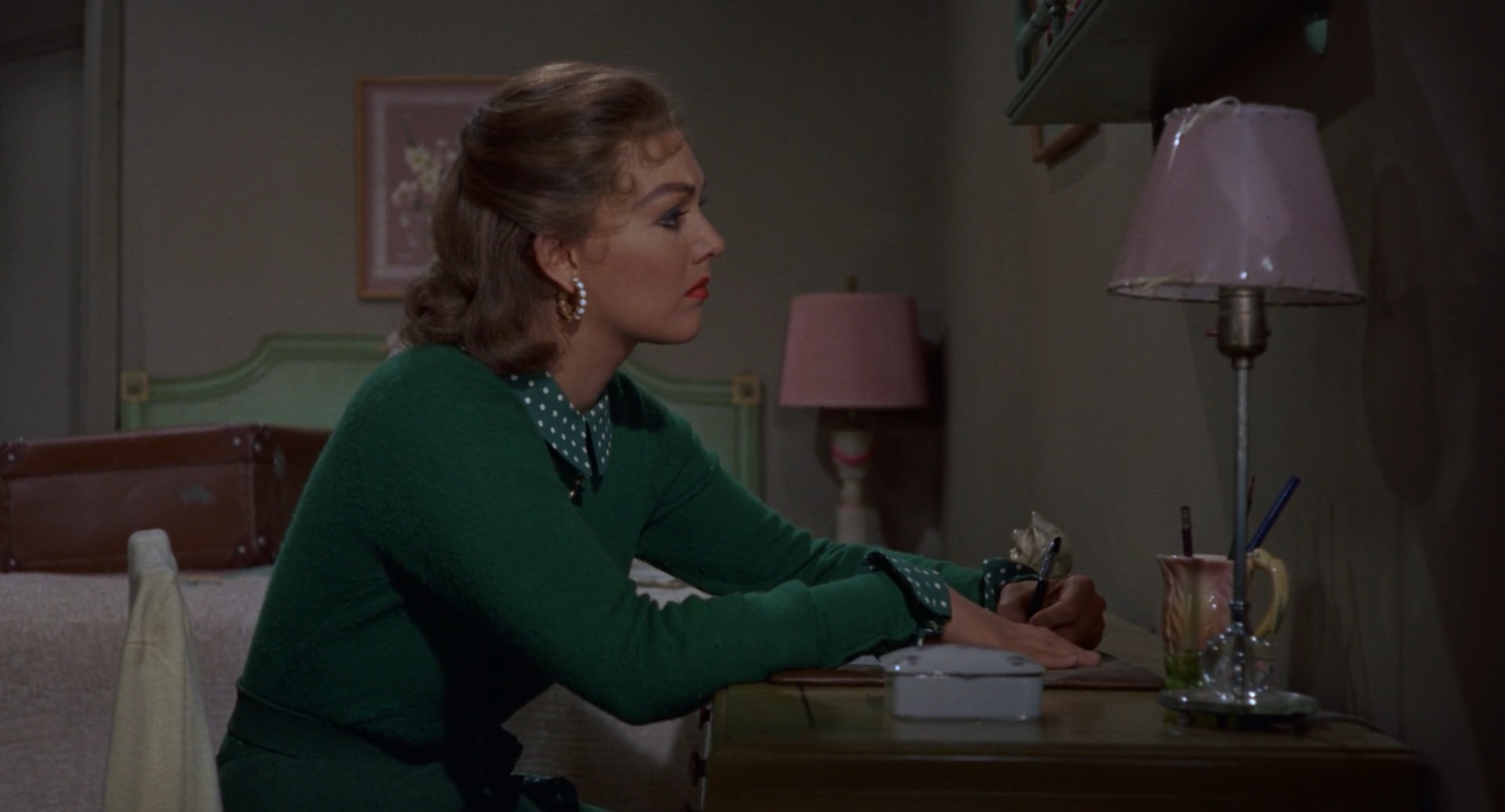
Judy writing the letter while does and expositive dialogue
The transition between these two acts is marked by the reading of Judy’s farewell letter — a brilliant and baffling moment of the narrative — in this scene, Hitchcock uses an writing cliché the expositive dialogue, but contrary to the normal and boring use of this technique he uses this to surpass the spectator’s expectations by revealing the mystery and it’s resolutions before the protagonist even have a grasp of it. This scene instead of weaking the tension of the plot actually shifts the focus to other topic, now we aren’t trying to solve the mystery along with the detective but to witness the unravelling of Scottie’s obsession until its most extreme consequences.
This scenes redefines the plot, it places the new act to the viewer’s delight, it isn’t about a mystery to be uncovered anymore but a psychologic colapse to be watched, in the front row actually. The Scottie’s pursuit after Madeleine, and its tragic end, were just a thematic prelude — a necessary background to expose the real dramatic core of this movie: the way that the obsession transforms the perception, destroys the reality and consumes the characters.
The director, in this point, abandons the Noir theme to make an intimate study about desire, control and the idealization collapse. What would be the grand revelation of an police mystery movie, here, turns into just a step in the ladder of madness.